

Projects · Completed
Crow Dam Spillway
Two phases of construction replaced the badly deteriorated chute, stilling basin, side-channel inlet structure and tunnel at Lower Crow Reservoir.
Project Overview
A new chute, flip bucket and piano key weir
The Crow Dam Spillway Project consisted of two phases: Phase 1 of construction (Area 2) consisted of replacement of the badly deteriorated existing chute and stilling basin with a new chute, a flip bucket, and armored apron to dissipate the energy prior to discharging into Lower Crow Creek.
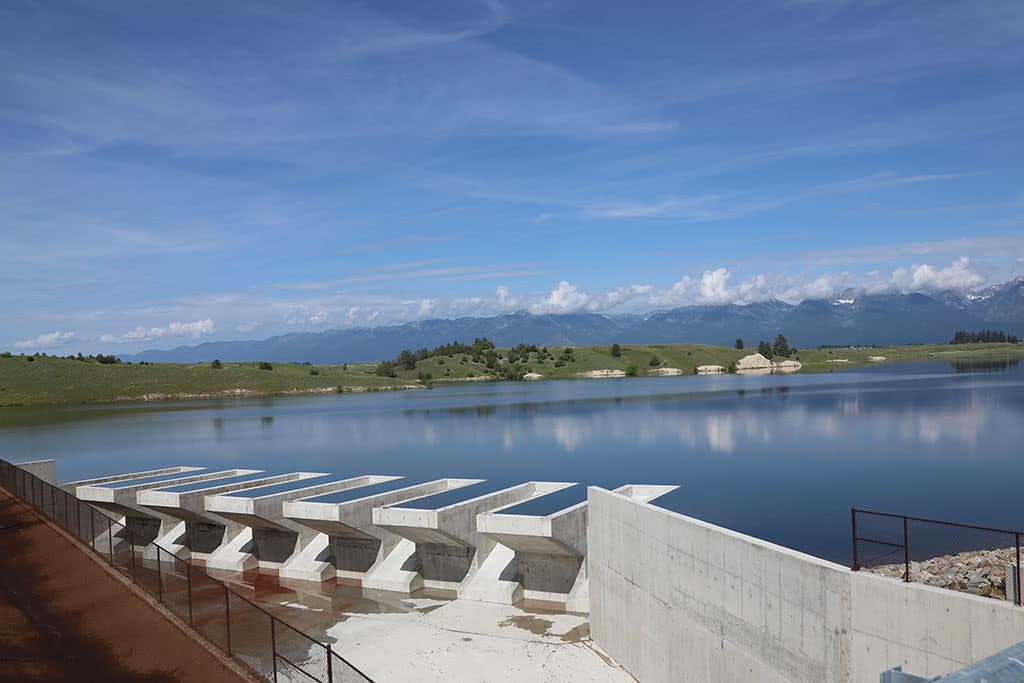
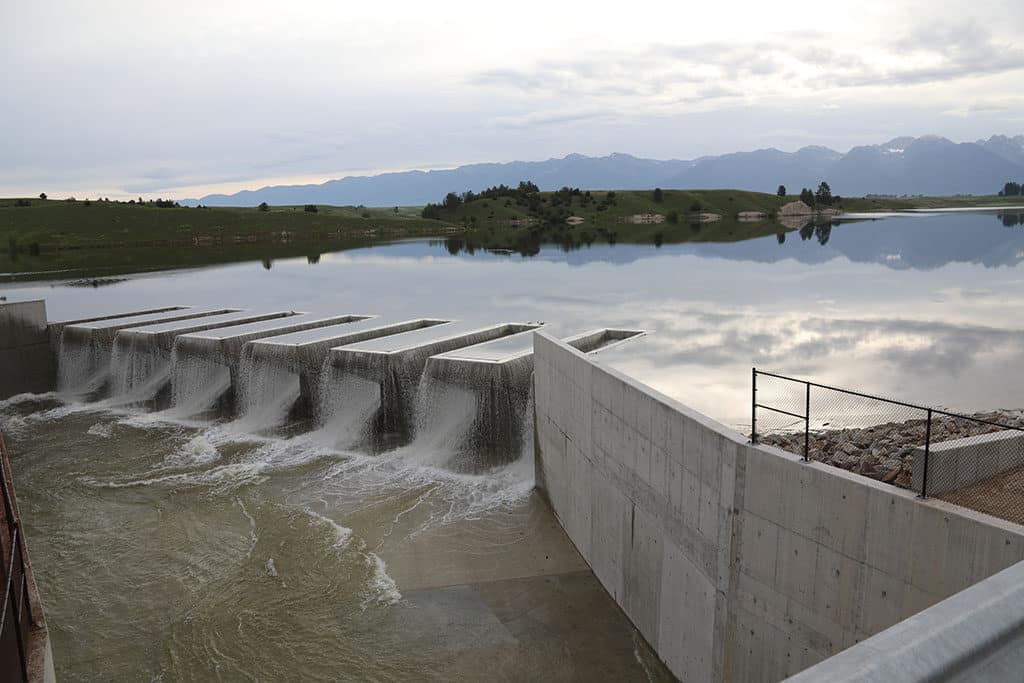
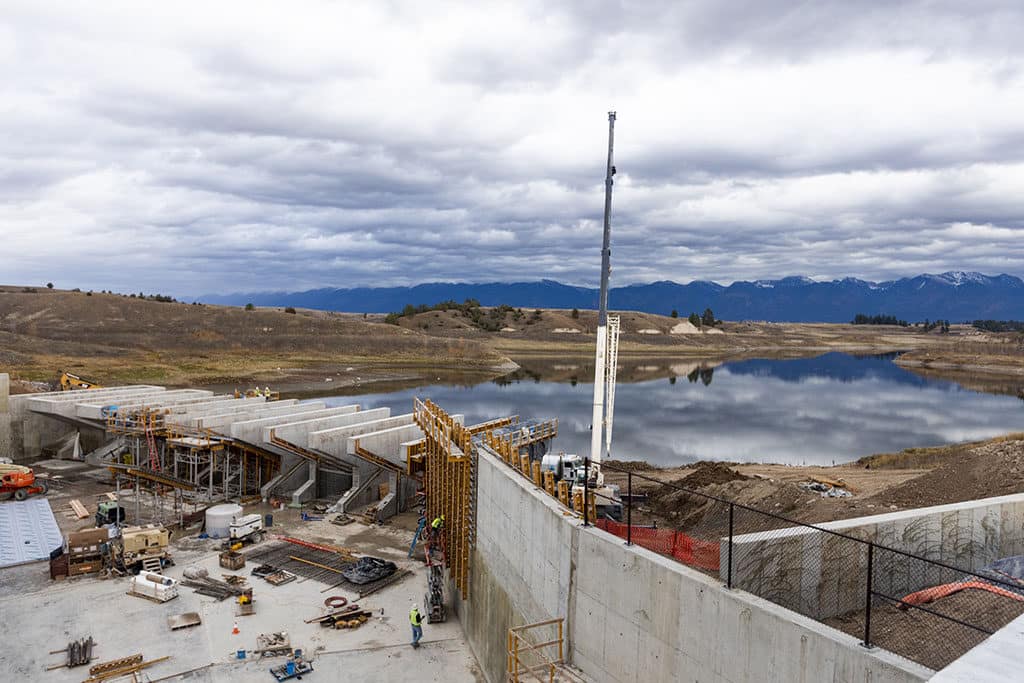
The Phase 2 (Area 3) consisted of the replacement of the existing side-channel inlet structure and tunnel with a piano key weir spillway crest structure, sloped trough, channel crossing beneath Crow Dam Road that will tie into the new structures constructed in Area 2, and installation of a bridge at the Crow Dam Road crossing.
Workflow Timeline
Design to lifted restriction
Design
- Phase 1: 2016-2018
- Phase 2: 2017-2019
- Design Consultant: Stantec (Phases 1 and 2)
Construction — Phase 1: 2018-2019
- Contractor: Karnath Contracting (Phase 1)
Construction — Phase 2: 2020-2022
- Contractor: Big Sky Civil/Montana Joint Venture (Phase 2)
Status Update
- A controlled fill of Lower Crow Reservoir occurred in 2023 along with heightened monitoring to evaluate performance of the dam and new spillway.
- After review of the fill and monitoring performed and subsequent analysis, the dam safety risk was deemed to be lessened to a point where the reservoir restriction that was in place since 2006 could be lifted.
- CSKT Safety of Dams will continue with a standard monitoring program.
Photo Gallery
Construction and completion
Project Team
Partners
BIA
Design Consultant: Stantec
More dam safety work
Safety of Dams oversees the Reservation’s 15 high-hazard dams.